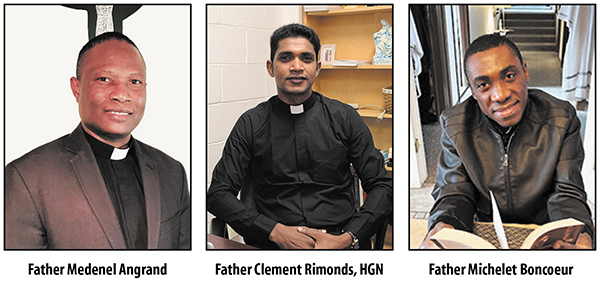





July 15, 2026 By Keith Benman Two parishes in the eastern region of the Diocese of Ogdensburg have been deprived of their pastors and another parish at the other end of the diocese may be deprived of a parochial vicar this year because of policy changes and delays at United States Immigration and Customs Services. This follows the stranding of a diocesan priest in Kenya last year over immigration issues and another priest being forced into an extended stay in the Philippines the year before because of an immigration processing backlog. Although the details of each case are different, overall the actions of immigration authorities are creating a crisis for the diocese, which already suffers from a severe priest shortage. “It’s a heavy burden for these parishes, for the diocese, and in a very real way for these faithful servant priests who come from their homelands to serve the people of Northern New York ” said Father Christopher C. Carrara, diocesan vicar for clergy and director of seminarians. The latest priests to fall victim to increased scrutiny of visa applications, immigration backlogs and other federal actions are as follows. Father Medenel Angrand was barred by immigration authorities from publicly saying Mass or taking part in any other public priestly duties as of May 23. He has worked in the diocese for years on a religious worker visa, most recently as pastor for St. Mary’s Church, in Ticonderoga; the Church of the Sacred Heart of Jesus, in Crown Point; and Our Lady of Lourdes Church, in Schroon Lake. His title was changed as of May 23 from “pastor” to “pastor in residence” because he is barred by federal regulations from performing any public priestly duties. Father Fernando V. Solomon has been appointed administrator so parishioners can continue to receive priestly services. Father Angrand’s case is particularly galling for diocesan officials because he has valid authority to stay in the United States. But his work authorization has not been renewed by immigration authorities. That’s despite having applied for a renewal of his work authorization more than a year ago. In addition, he has sought to upgrade the religious worker visa he has been utilizing in his years here by applying for permanent residency (“Green Card”). The result of all this is that Father Angrand can remain in his parish as a “pastor in residence,” but he cannot even say Mass for his parishioners. “Just think of the heart and mind of the priest who the government won’t let function as a priest,” said Father Carrara Father Clement Rimonds, a Herald of the Good News priest who was serving in the Ogdensburg diocese as a pastor for a grouping of churches in the eastern region is currently stuck in India until U.S. Citizenship and Immigration Services acts to renew his R-1 (religious worker) visa. He was pastor for the Catholic Community of Holy Name and St. Mathew, in Au Sable Forks; The Roman Catholic Community of Keeseville and St. Margaret’s Church, in Wilmington; and the Catholic Community of St. Philip of Jesus and St. Joseph, in Willsboro. The diocese already paid for premium, supposedly faster, processing for Father Rimond’s visa renewal but immigration services has requested more information. That’s even after receiving a one-and-a-half inch thick immigration application vetted by diocesan lawyers. “This all for a man who has already been here serving faithfully,” Father Carrara said. Father Rimond’s responsibilities are being covered by a retired priest, Monsignor Dennis J. Duprey Father Michelet Boncoeur, just ordained a priest May 30, is now facing a possible delay in his July assignment as parochial vicar to Blessed Sacrament parish, in Watertown. That parish is made up of the churches of the Holy Family, St. Anthony’s Church, and St. Patrick’s Church – all in Watertown. Long waits for processing visas have resulted in a long delay in the approval of his religious worker visa request. He needs to change his student visa used to study in seminary to a religious worker visa so he can undertake his priestly duties. “This brand-new, newly ordained young man, excited to serve the people of God after his ordination and first Mass, (may) not be able to do anything,” said Father Carrara. Fortunately for Boncoeur, a change in regulations means he doesn’t have to return to his home country of Haiti to renew his visa as was required previously. Haiti is one of 19 nations whose citizens are barred entry to the United States. His service is very much needed at Blessed Sacrament Parish, one of the diocese’s larger parishes. The increased difficulties with immigrant priests’ visas seems to have begun under a Biden Administration policy where those applying for religious worker visas were put into a much larger application pool that included other types of visas. That greatly extended their visa wait times. In the past couple of years, difficulties and waiting periods for obtaining visas have generally increased under new policies initiated by the Trump administration. The United States Conference of Catholic Bishops did score a victory this year when its lobbying efforts resulted in the Trump Administration doing away with the required one-year overseas waiting period for religious worker visa renewals. Those seeking renewal can now stay in the United States. However, as this article was being prepared, U.S. Citizenship and Immigration Services announced it will require those people applying for permanent residency here to return to their home countries while awaiting processing of their applications. That could possibly affect Father Angrand and some other priests in the diocese. Some previous cases causing difficulties for priests in the diocese have been resolved. Father “Jay” de la Rosa, pastor at Holy Angels Church, in Altona, and St. Ann’s Church, in Mooers Forks was the priest who two years ago was forced to stay in the Philippines for a year while awaiting renewal of his religious worker visa. He was eventually granted a visa renewal and has been able to return to his duties in the diocese. In a different type of case last year, Father John K. Ojuok was stranded in Kenya when immigration officials informed him he had failed his interview at the U.S. embassy there. He had traveled to Kenya to renew a visa stamp needed for re-entry to the United States. He had been serving as parochial vicar at St. Peter, in Lowville; St. Mary, in Glenfield; and St. Hedwig, in Houseville. He also has since been able to return to his posts once the difficulties were resolved. Father Carrara says the diocese recognizes the importance of the vetting process but says unreasonable, bureaucratic delays in that process are causing a host of problems for priest applicants and the people they serve. “It’s frustrating when some information has already been provided and they ask again for the info they already have,’” he said. “And it’s frustrating when the process is taking so long that it affects the life of the people of the Diocese of Ogdensburg and of the North Country.” In addition, priests who immigrated from Haiti seem to have been singled out for especially prolonged screening, even though many have been serving faithfully here in the United States or attending school here. The Diocese has requested help from U.S. Rep. Elise Stefanik’s office in the case of getting Father Angrand’s work authorization processed. Father Carrara said the Congresswoman has been of help to the diocese in other priest-immigration cases. |
||||
|
|||||||||